
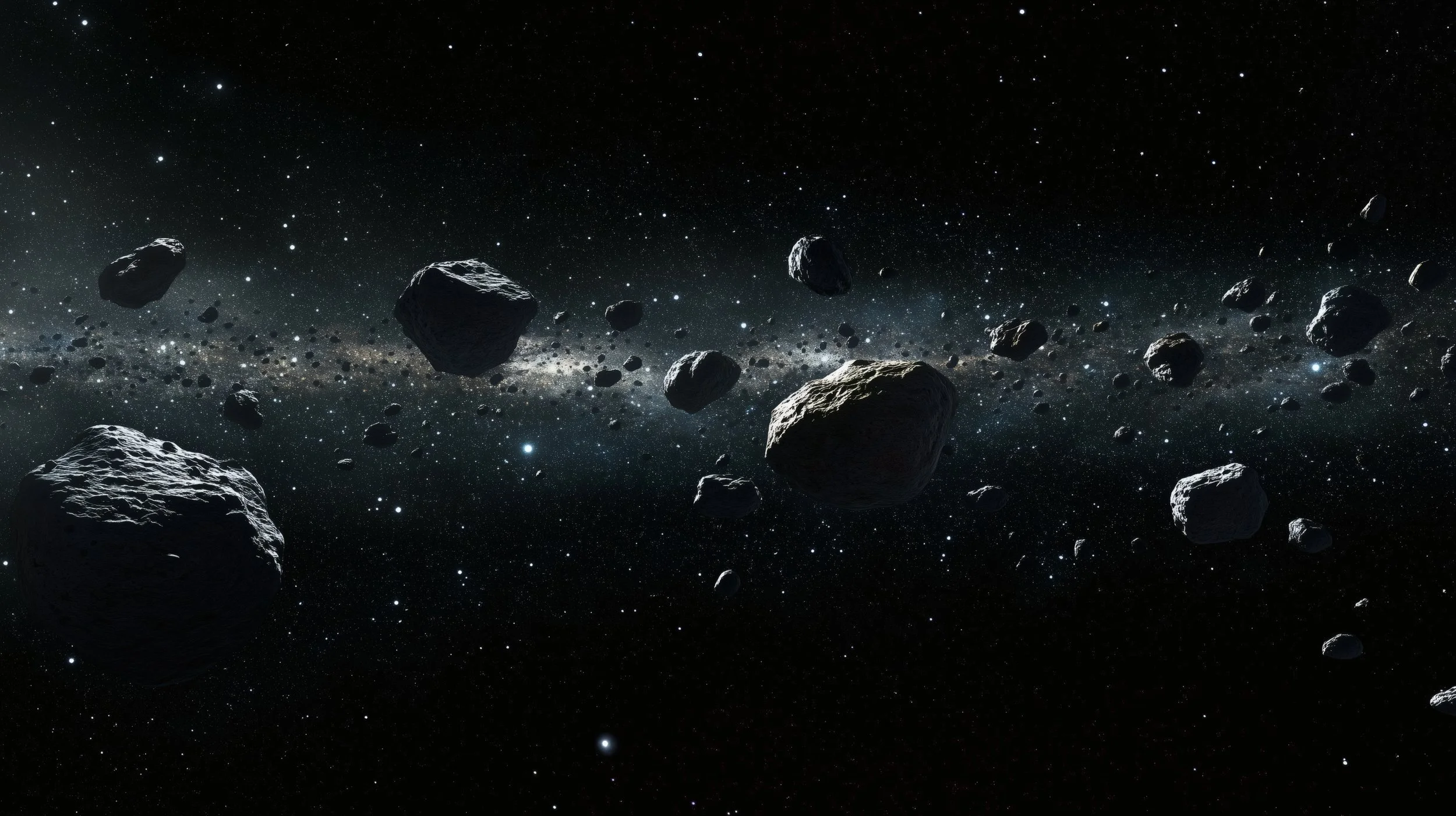







Asteroids
> 50 kg
Imaging / characterization equipment
Rapid response / Multiple Flyby
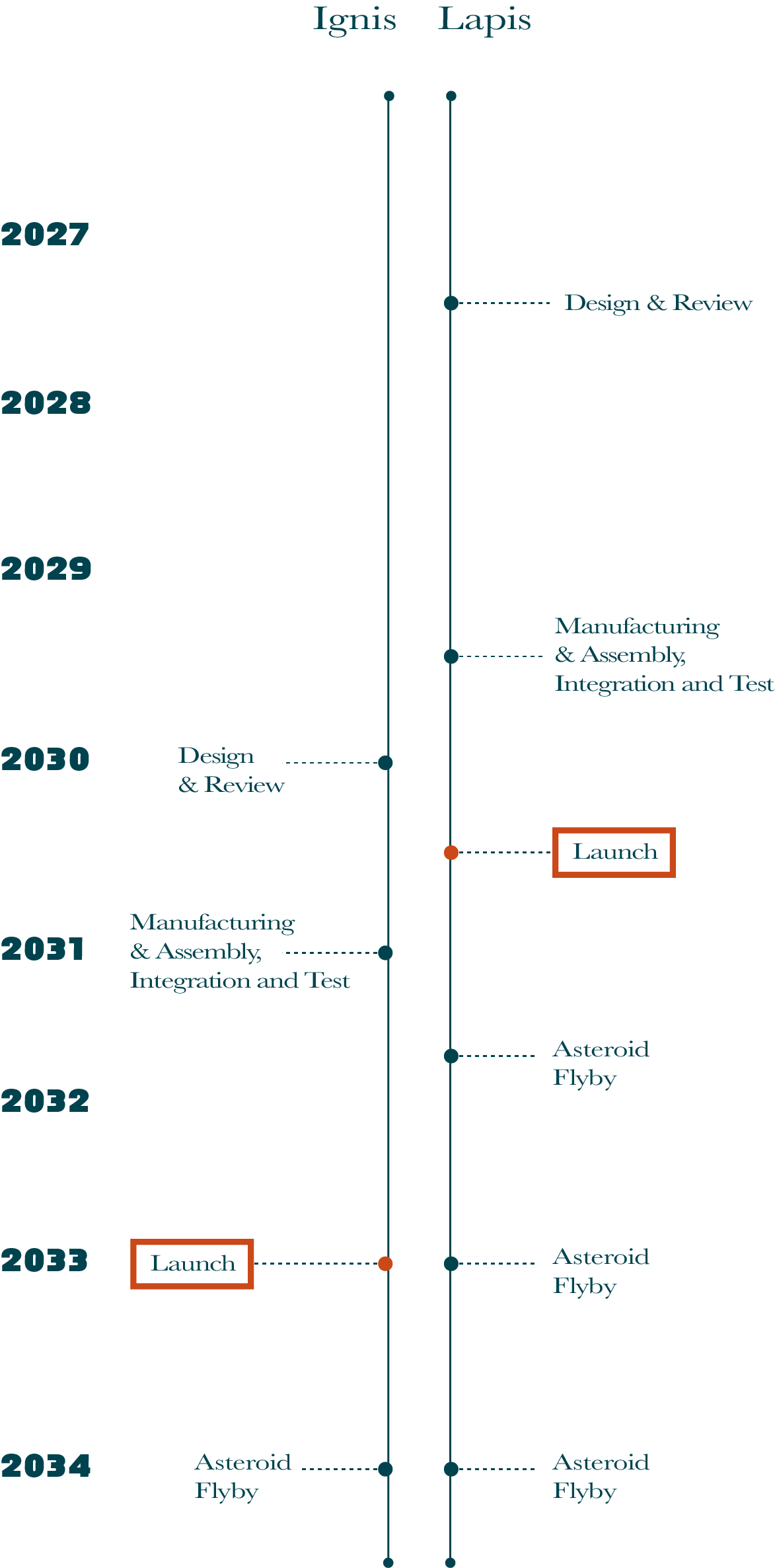
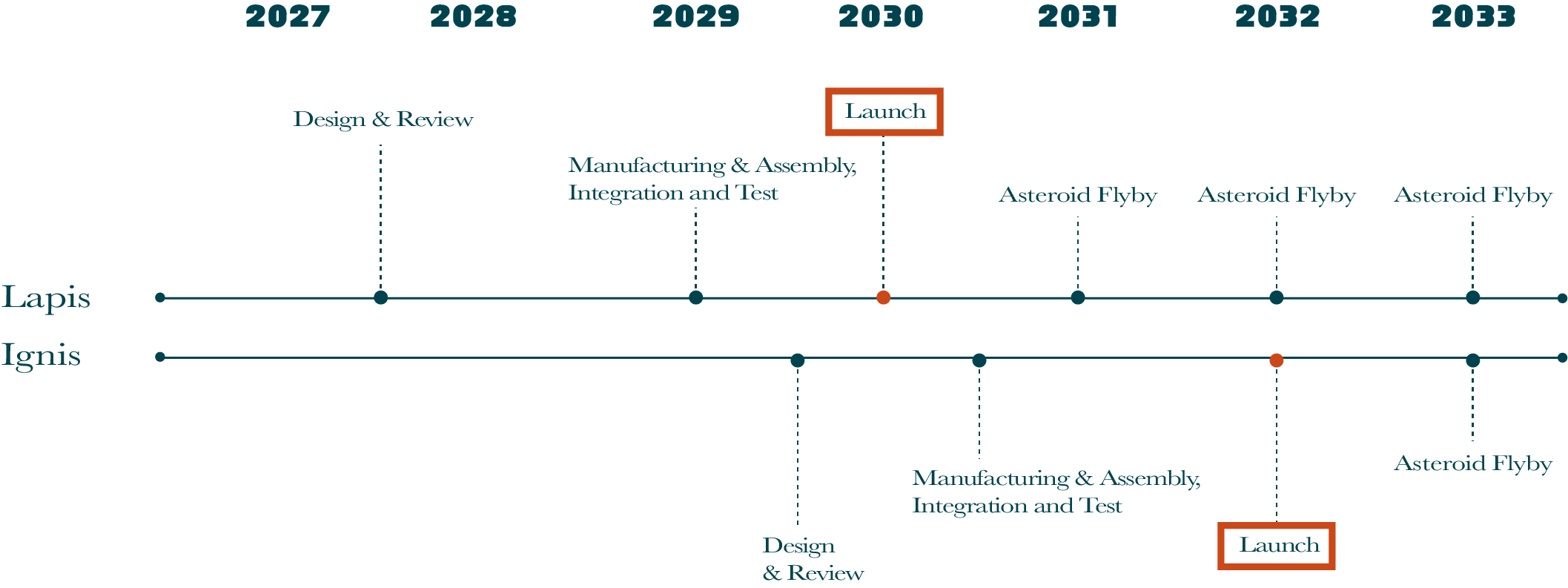
Fuseki operates a constellation of multiple spacecraft to achieve low-cost, high-frequency asteroid exploration, with its inaugural spacecraft named “Lapis.”
Using Fuseki's proprietary, ultra-optimized orbital design technology powered by machine learning, each spacecraft travels back and forth between Earth and asteroids for the duration of its operational lifespan. By leveraging lunar gravity assists and making trajectory changes with minimal delta-V, every spacecraft repeats asteroid flyby explorations annually.
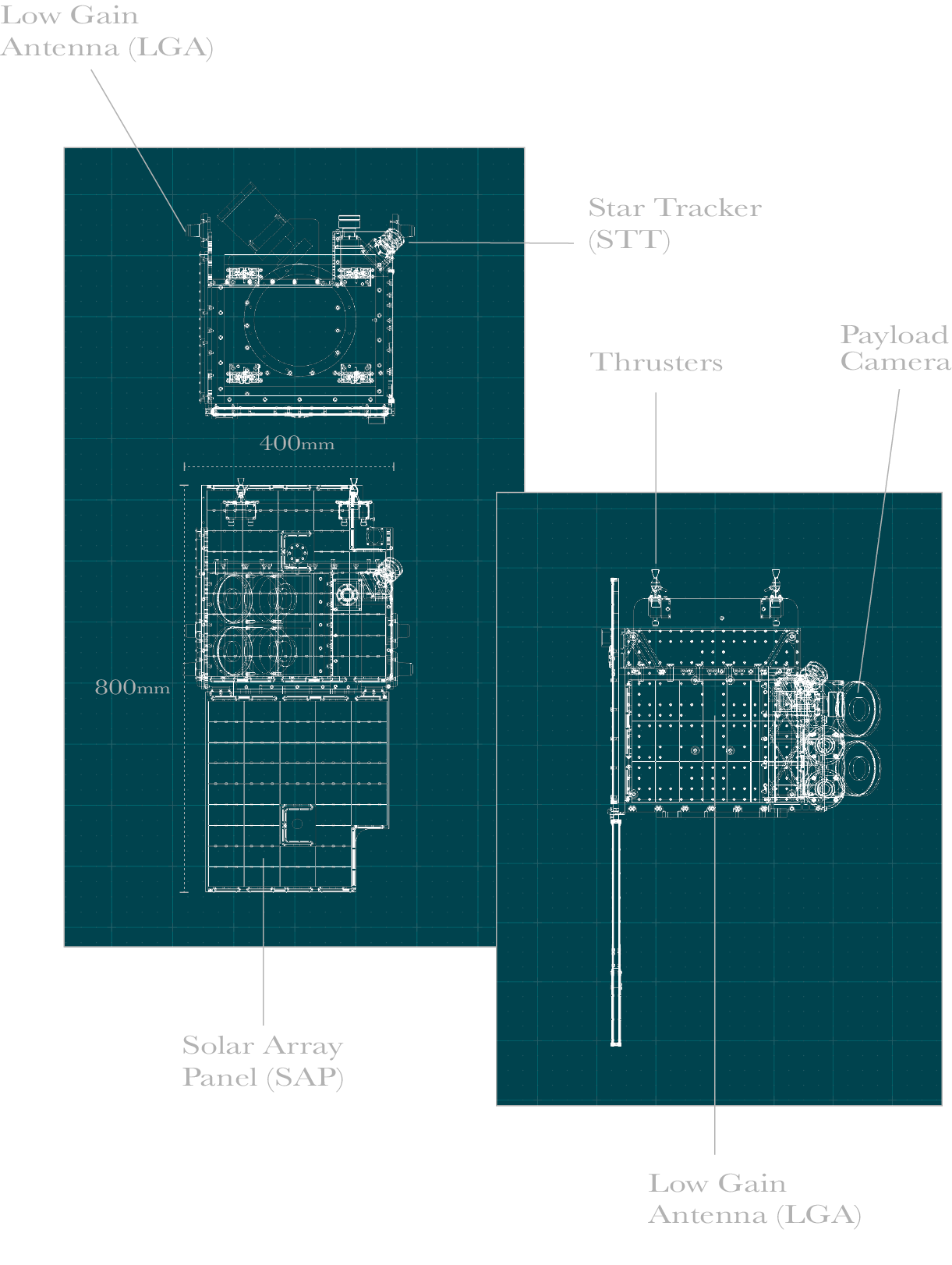
Fuseki's Micro-Spacecraft
Designed as the inaugural spacecraft for Fuseki's constellation, “Lapis” is a micro-spacecraft weighing under 50 kg.
Despite its lightweight design, it features the durability required to repeatedly conduct asteroid flyby observations in deep space. It is equipped with a high-resolution telephoto camera and its control system to capture detailed images of asteroids, along with autonomous navigation and propulsion systems that enable the spacecraft to navigate deep space independently.
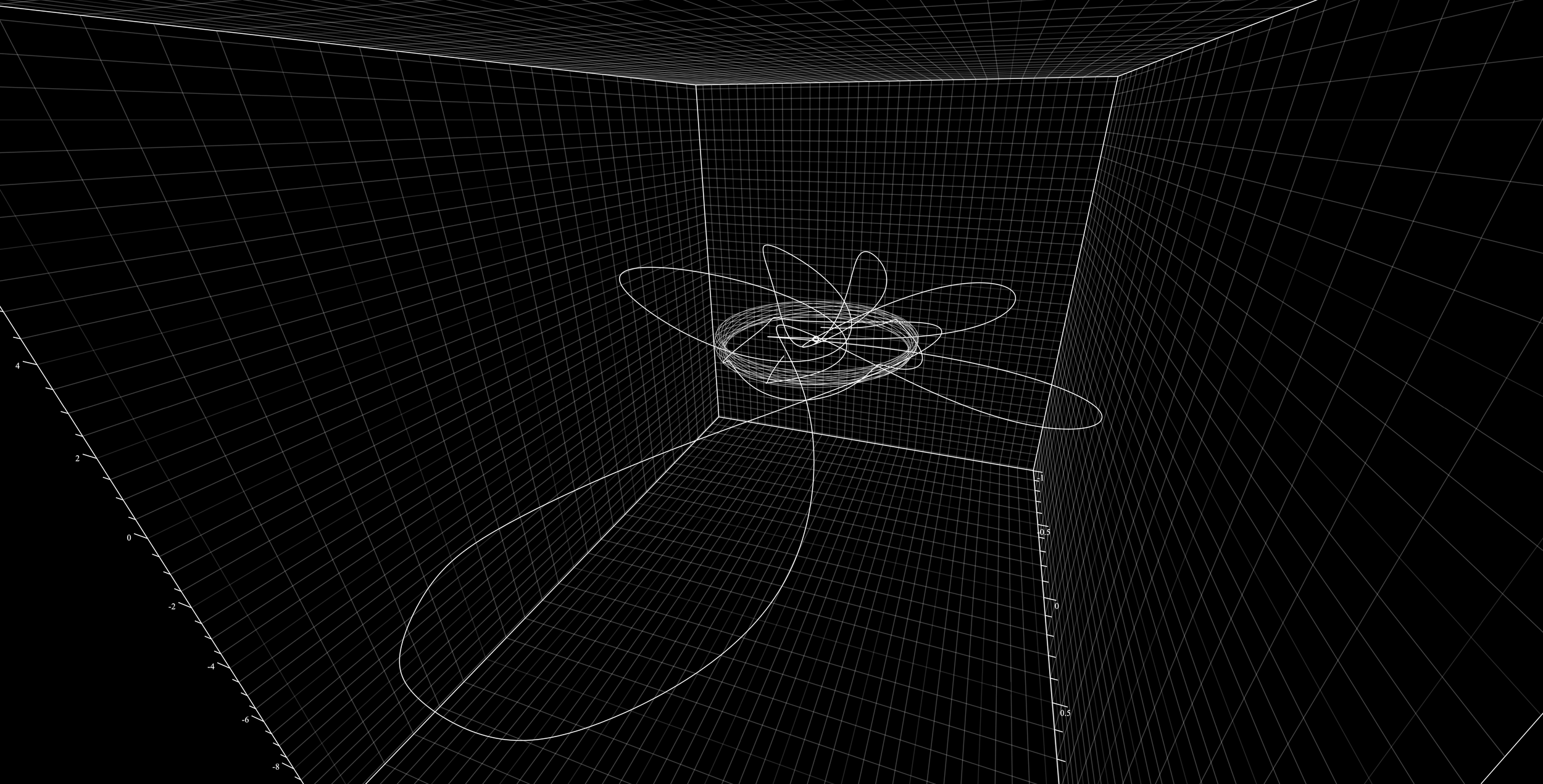
Flyby Cycler Orbit
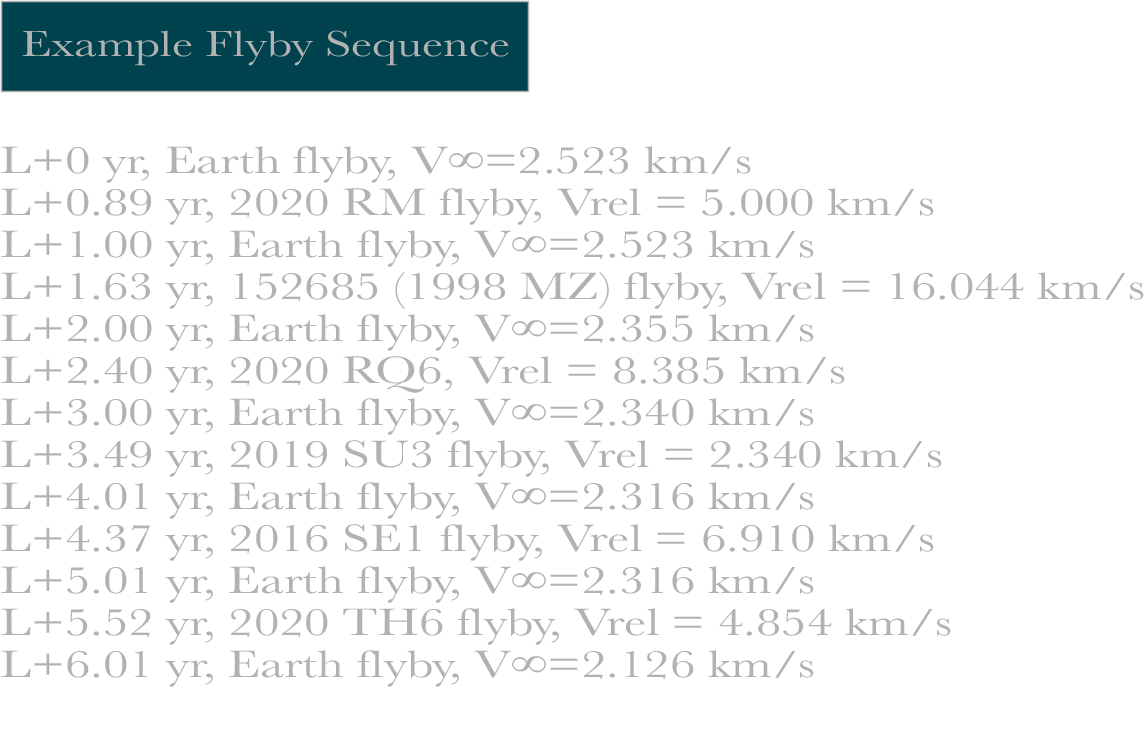
Fuseki's satellite constellation is built on the "asteroid flyby cycler orbit," enabled by machine learning-based orbital design to explore numerous asteroids. After each flyby, spacecraft return near Earth, using gravity assists to head toward new targets. By repeating this round trip with minimal energy, each spacecraft explores a new asteroid roughly once a year.
Unlike sample-return missions, flyby exploration requires no deceleration, allowing for an unprecedented number of targets. Through high-precision propulsion maneuvers and minimal propellant use, spacecraft achieve rapid access to a wide range of targets for up to 10 years.
This stable cycle enables prompt deployment to newly discovered asteroids—for defense or science—within just one month.
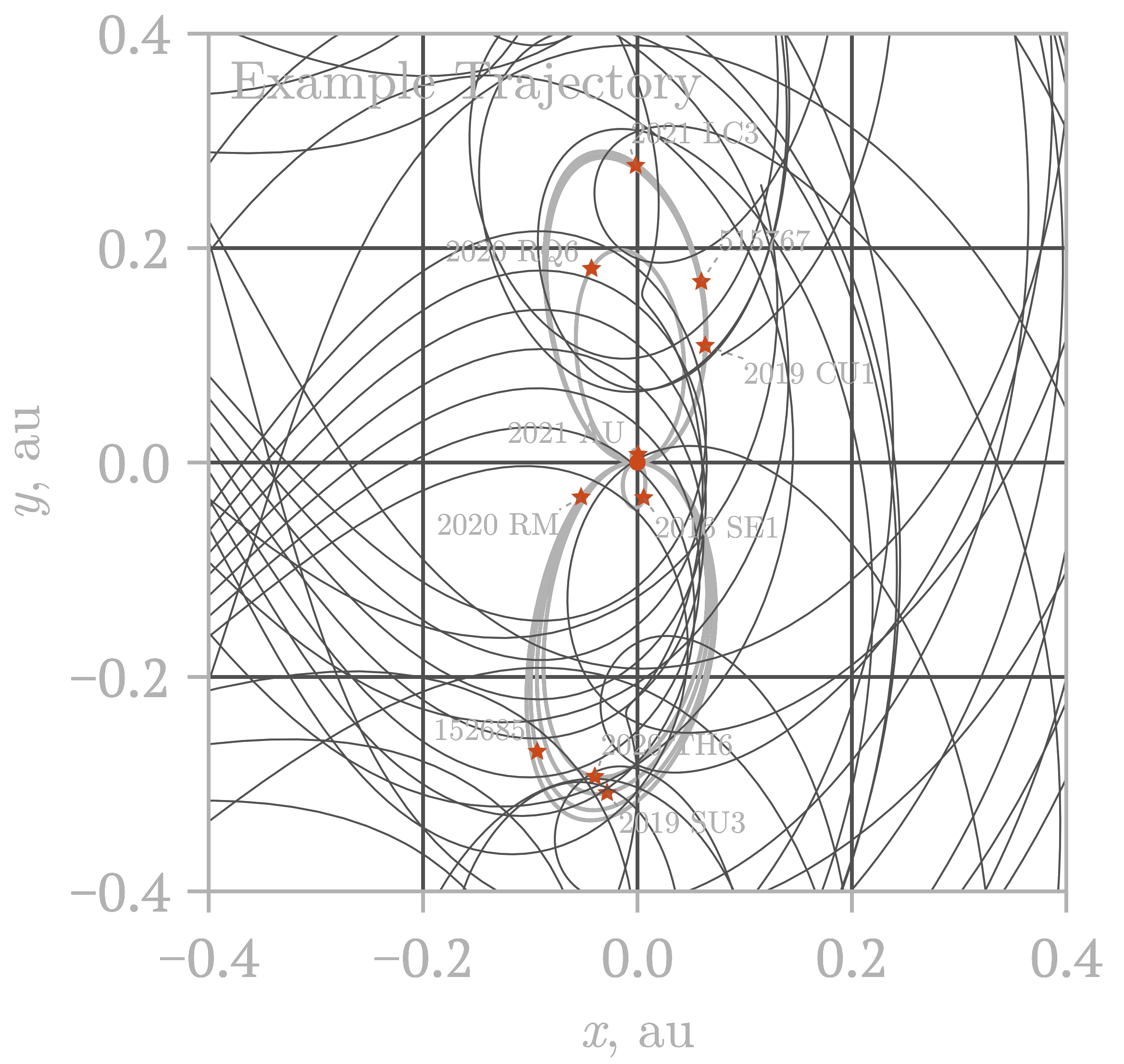

Micro-Spacecraft + AI-Based Orbital Design
Frequent Asteroid Exploration

Optimized Propulsion Maneuvers
Rapid-Response Exploration
High-Resolution Visible Imaging
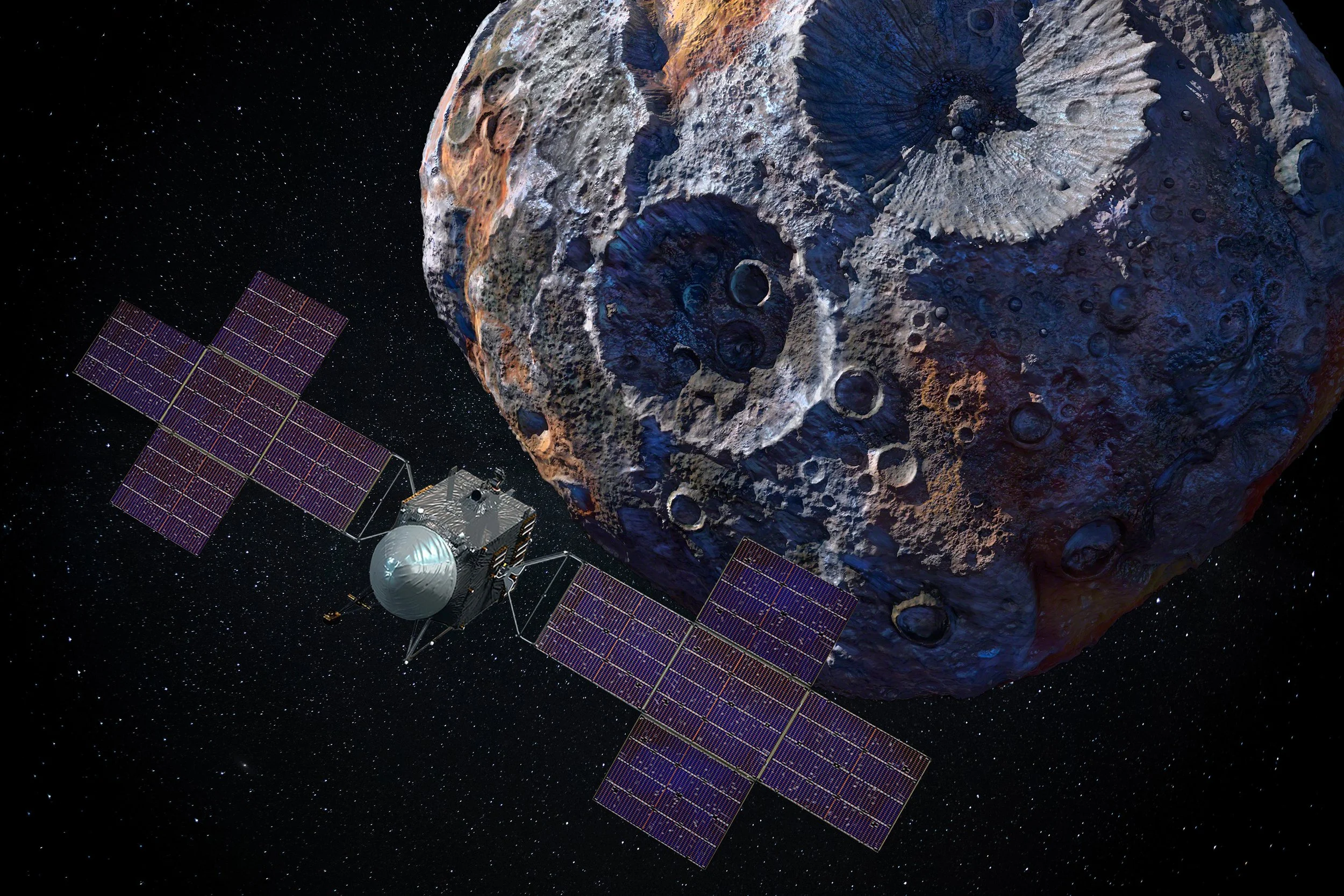
During flybys, spacecraft approach within dozens of kilometers of asteroids to conduct detailed remote sensing observations, including high-resolution visible images and multi-band spectroscopic data.
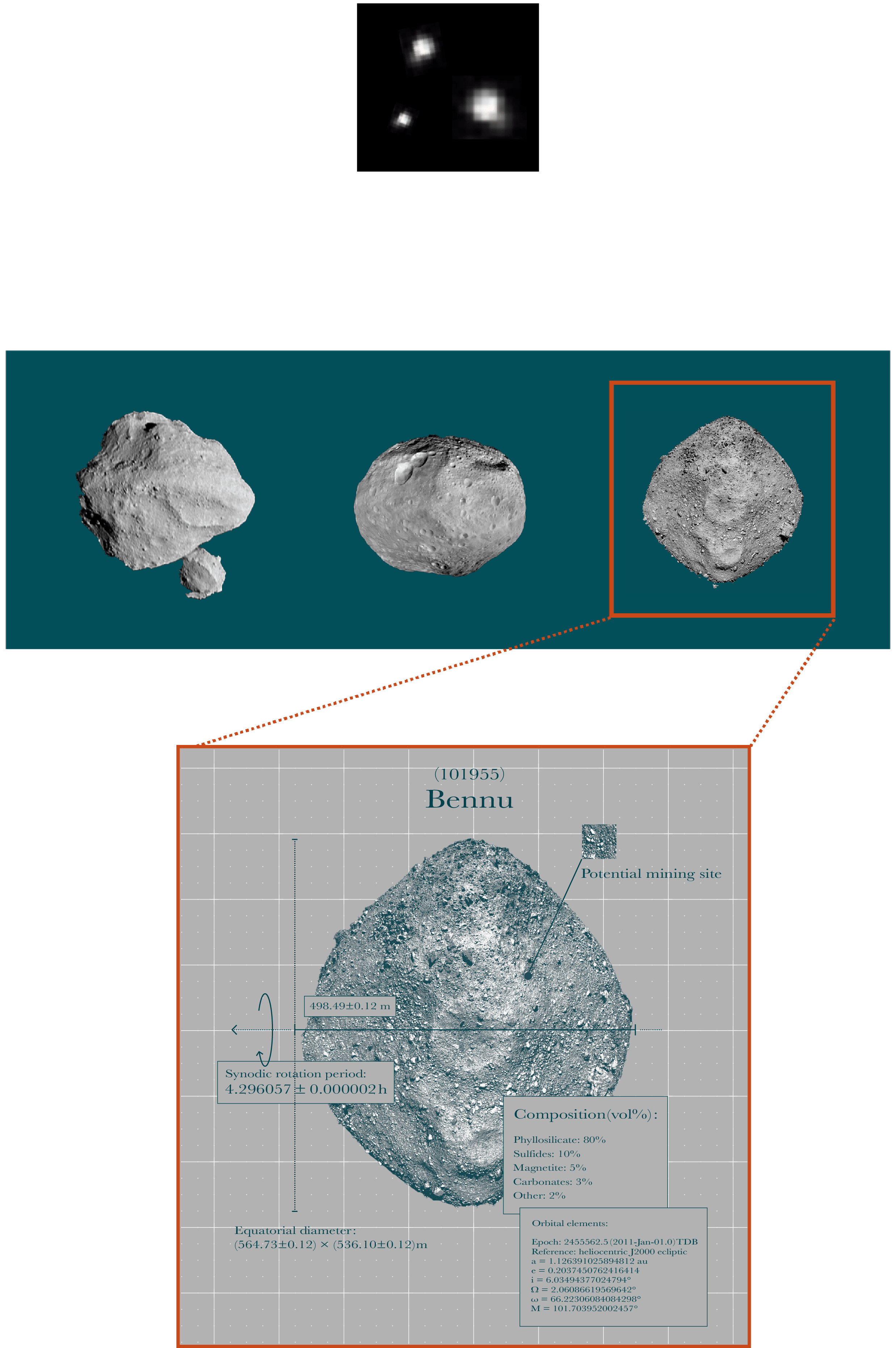
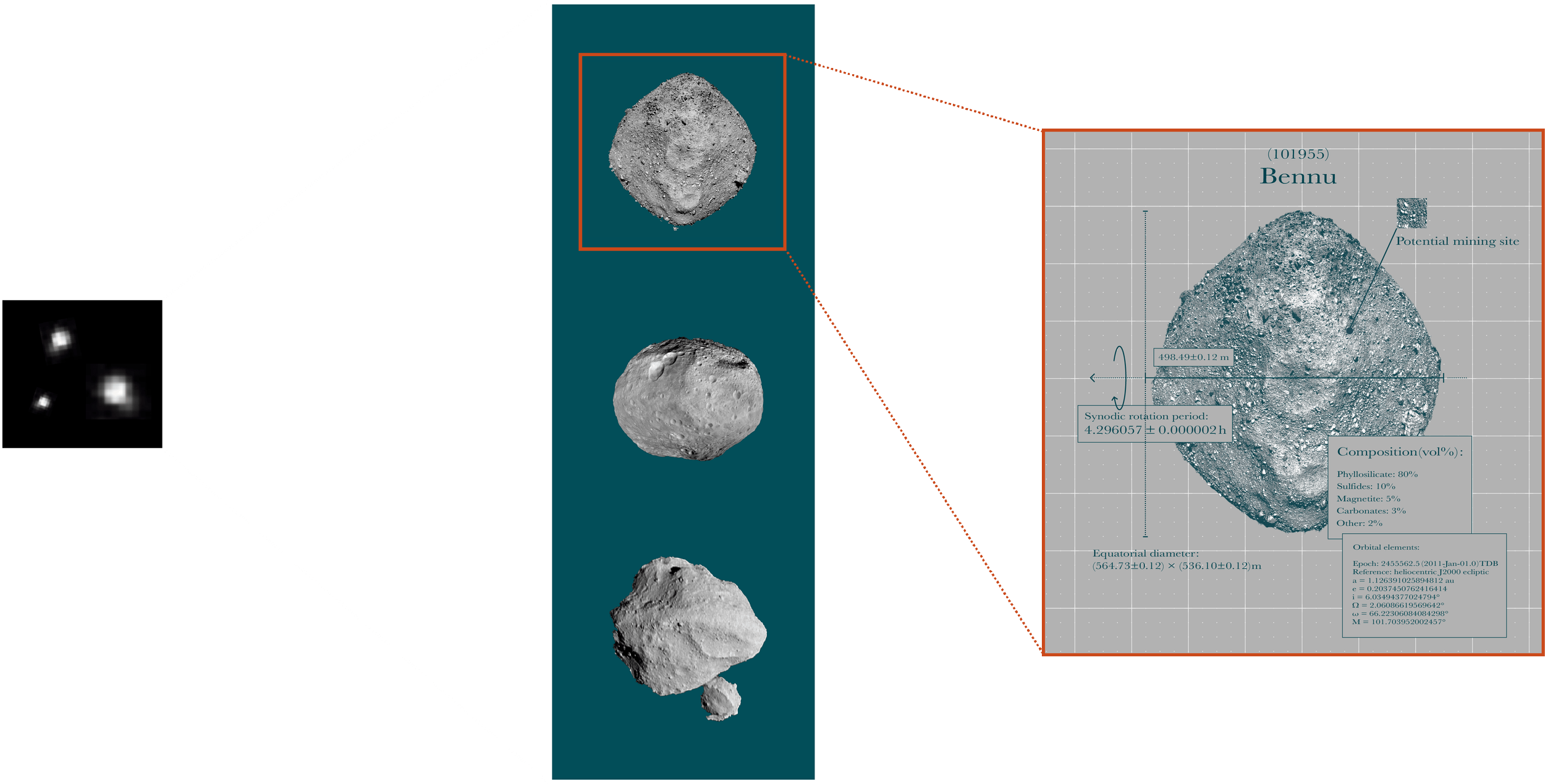
Because ground-based telescopes can only view asteroids as point sources—unable to reveal detailed information such as surface features, shape/center of mass, composition/distribution, or rotation axis/period—Fuseki's flyby exploration captures and delivers these critical insights.
Over 1.5 million asteroids have been discovered to date (*1), and this number is certain to surge with the launch of NASA's NEO Surveyor, scheduled for 2028.
Driven by this rapid increase in asteroid discoveries, the demand for asteroid exploration is expanding rapidly for two key purposes: Planetary Defense (protecting Earth from asteroid impacts) and Asteroid Resource Exploration (utilizing asteroid resources).
Because obtaining detailed information about target asteroids in advance is crucial to the success of resource exploration and planetary defense missions, Fuseki believes it is essential to provide low-cost, high-frequency reconnaissance exploration.
*1 : Reference: IAU Minor Planet Center」
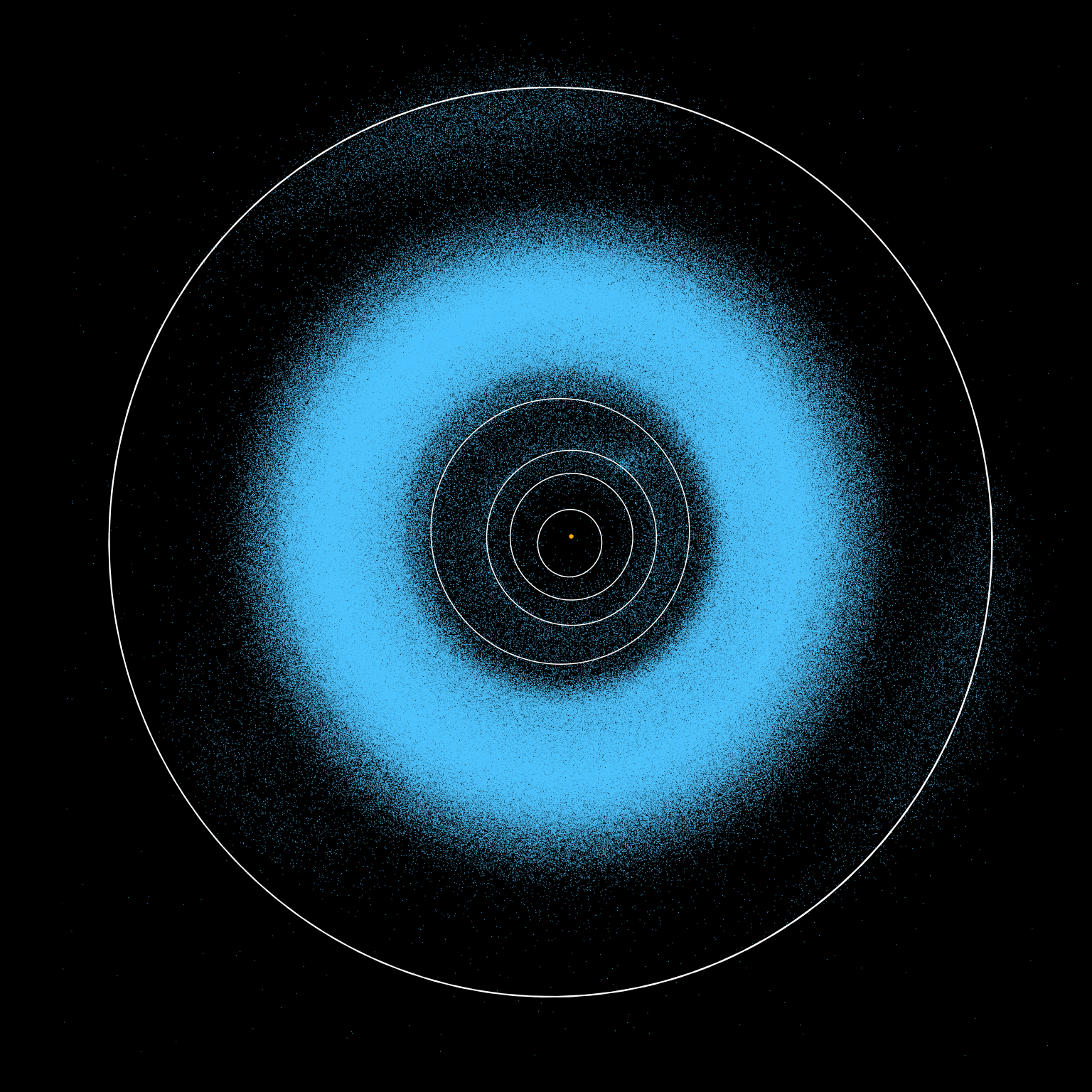
Significance of Asteroid Exploration


Please use this form for inquiries and requests.
A representative will get back to you shortly.